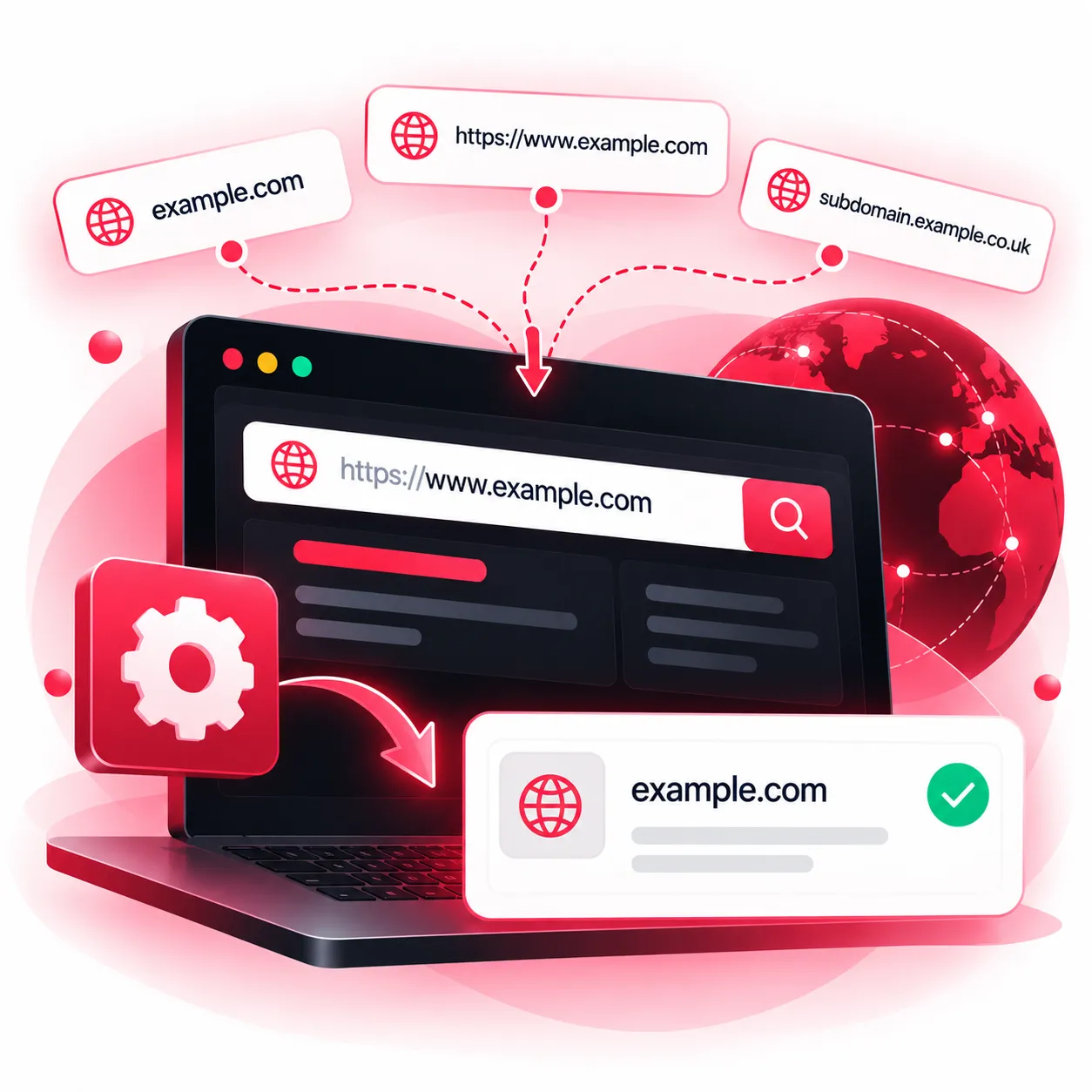
Clean the input
Paste a domain or full URL. We extract the hostname, lower-case it and convert international names to ASCII (Punycode).
Check any domain instantly — registrar, dates, DNS records, DNSSEC and availability, live from official registries.
Try
Owner contact details are usually hidden by the registrar for privacy. We only show what the registry publishes.
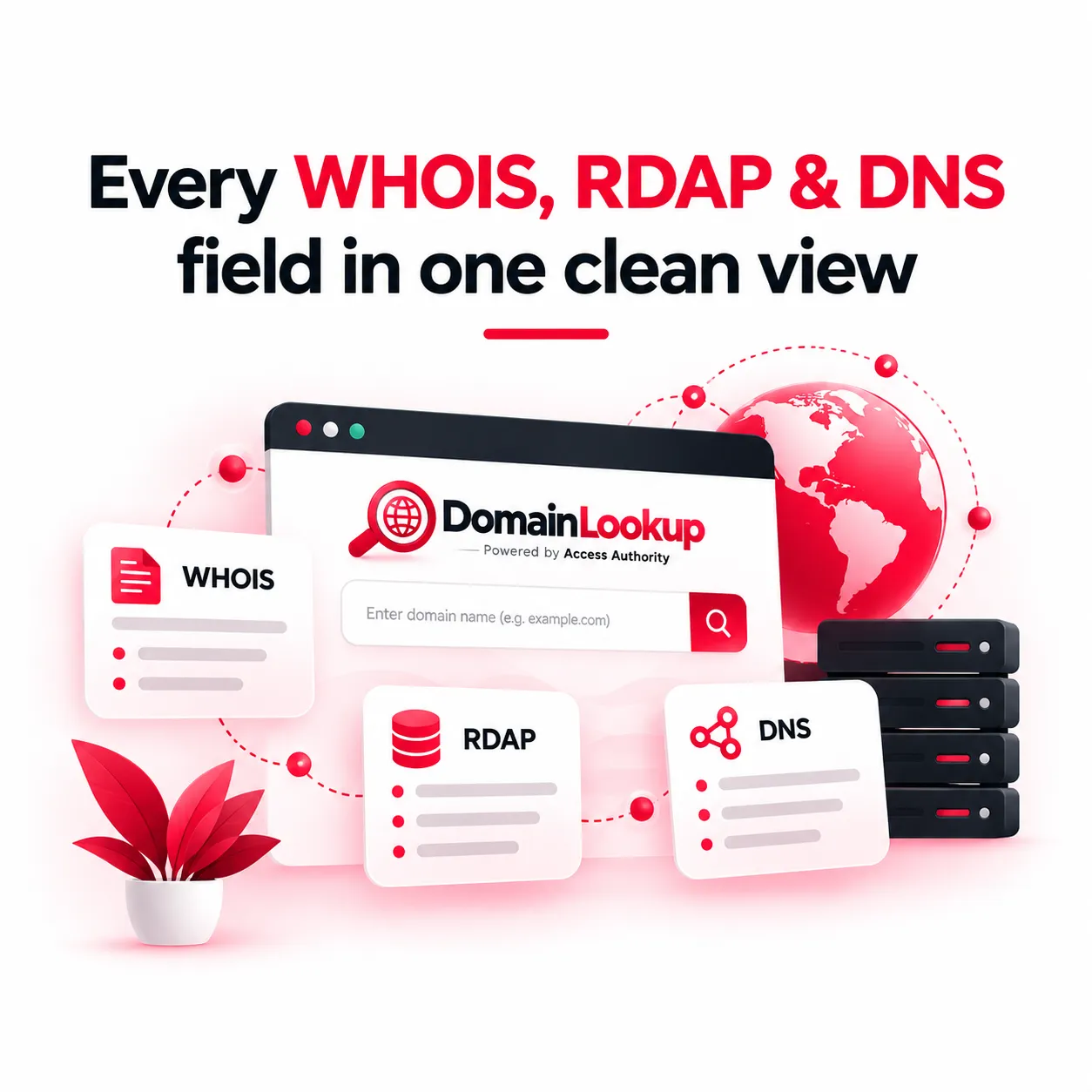
Structured domain records with registrar, nameservers, dates and DNS — no raw WHOIS or RDAP JSON.
Three steps, usually completed in under two seconds.
Paste a domain or full URL. We extract the hostname, lower-case it and convert international names to ASCII (Punycode).
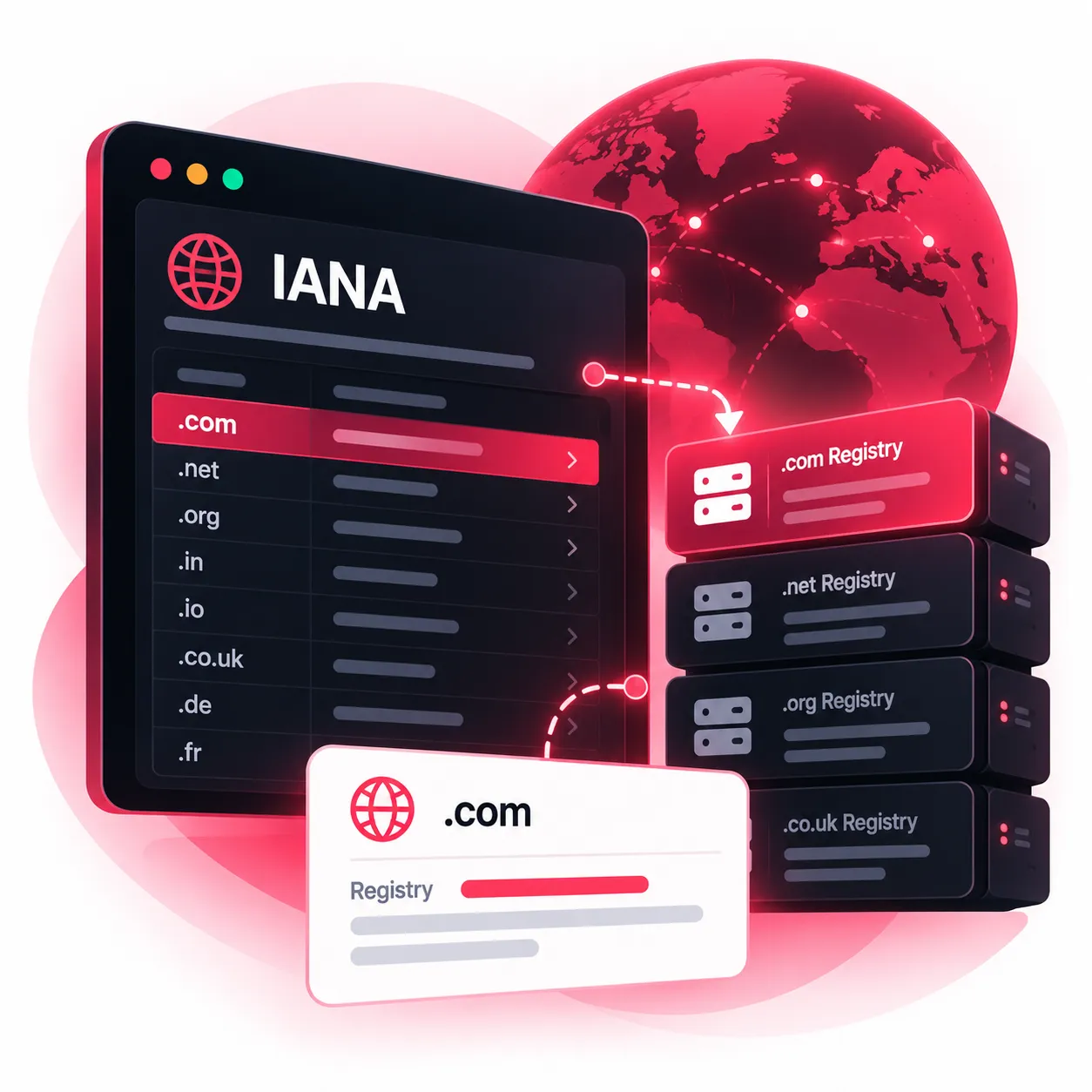
The IANA directory tells us which registry runs the extension, including multi-part ones like .co.uk.

We fetch RDAP and WHOIS records, merge them and show registrar, dates, nameservers, DNS records, status and contacts.
Every domain resolves through DNS. Here is what each record type means and why it matters.
Maps a domain to an IPv4 address. The most common record — it tells browsers where your website lives.
Maps a domain to an IPv6 address. The modern successor to A records, used for next-generation internet.
Mail Exchange — tells the internet which servers handle email for your domain.
Name Server — points to the authoritative DNS servers that hold your domain's records.
Holds text data for verification, SPF, DKIM and domain ownership checks.
Canonical Name — aliases one domain to another, often used for subdomains.
Real-world use cases for domain and DNS research.

Check registration age, expiry date and registrar. A name expiring next week is a very different conversation than one renewed for ten years.
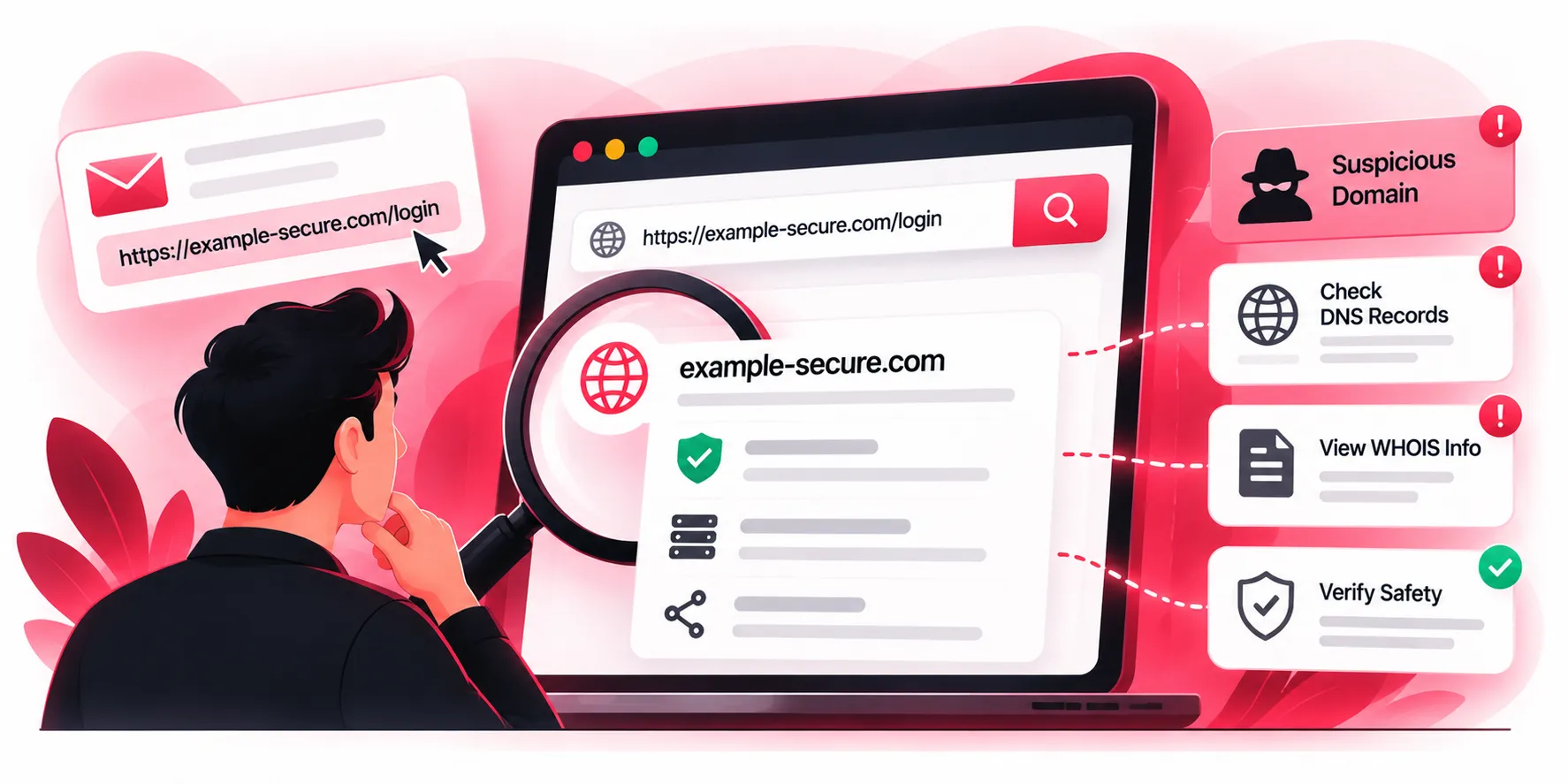
Phishing sites are often days old. A domain created yesterday that imitates a bank is a strong warning sign.
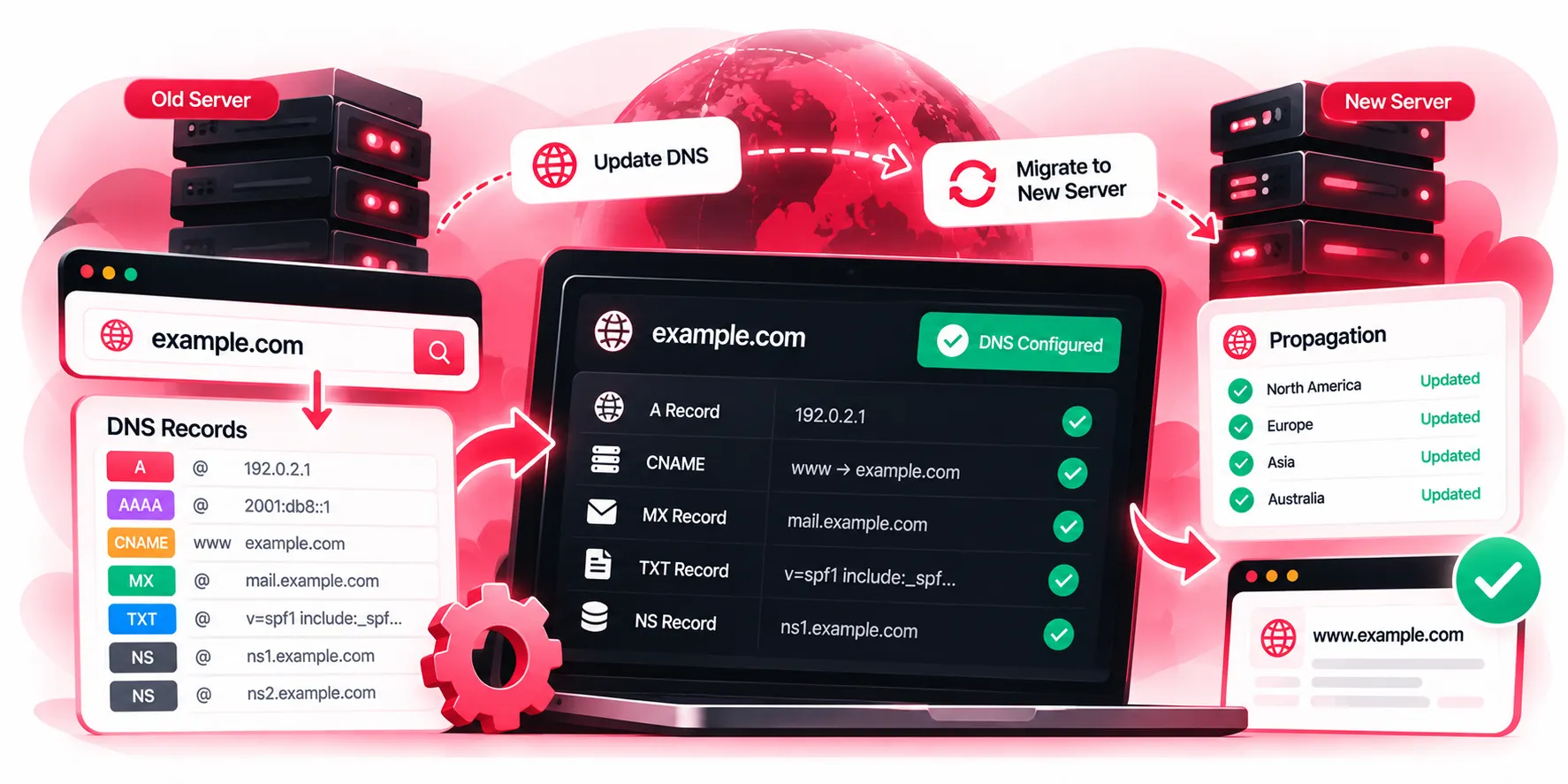
Confirm the nameservers a domain really uses and whether a registrar lock or hold is blocking a change.
Domain Lookup is a product of Access Authority, a product-based technology company that builds its own digital tools and software solutions, including ChitraKit and QRKit. Alongside developing innovative products, Access Authority also provides client-focused services such as website development, ERP systems, and custom software solutions tailored to businesses.
Yes. Each search queries the registry's RDAP service and, where available, the WHOIS server. Results are cached for about 60 seconds to keep things fast and fair to the registries.
Since 2018 most registries and registrars hide personal contact details for privacy (GDPR and similar laws). DomainLookup shows only what is published and never guesses an owner.
Usually yes. When the registry confirms there is no record, we show the domain as available. Reserved and blocked names can look the same, so always confirm with a registrar before buying.
WHOIS is the older plain-text protocol. RDAP (Registration Data Access Protocol) is the modern, structured replacement that returns JSON. DomainLookup queries both and shows whichever is available.
No accounts, no cookies, no analytics and no search history. See our privacy policy.